+28y
1984
1984 ↗ Wikipedia
Vision from 1956
Dir. Michael AndersonUnited KingdomEnglishIMDb 6.990 min
dystopiasurveillancepropagandanuclearthoughtcrimetechnocracylondon
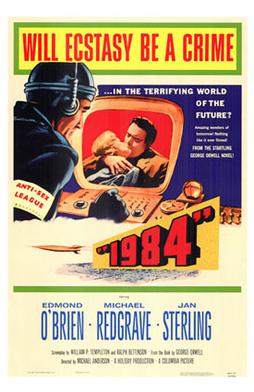
In this 1956 adaptation of Orwell's novel, the future of 1984 is a grim, post-nuclear London (designated Airstrip One) within the superstate of Oceania. The world is defined by a landscape of crumbling Victorian infrastructure juxtaposed with the towering, brutalist Ministry buildings. The environment is one of scarcity, perpetual war, and absolute state control, where the very concepts of objective truth and individual privacy have been systematically eradicated by the ruling Party, led by the enigmatic figure of Big Brother.
Societal dynamics are enforced through Newspeak, a language designed to limit the range of thought, and mass surveillance conducted via ubiquitous "telescreens" that both broadcast propaganda and monitor citizens. The film introduces a specific divergence from modern history, suggesting that a nuclear conflagration in 1965 led to the rise of the current tri-polar world order. While set in London, the Earth is depicted as a divided battlefield where the three superstates—Oceania, Eurasia, and Eastasia—engage in endless, localized conflicts to consume surplus labor and maintain domestic discipline.
The film's most striking predictions involve the integration of media and monitoring. The telescreen serves as a direct precursor to modern smart devices and two-way communication, though it functions as a mandatory tool for state obedience rather than a consumer convenience. The film's depiction of history being rewritten in real-time correlates strongly with modern concerns regarding digital misinformation and the volatility of online archives. Additionally, the state's use of Two Minutes Hate sessions mirrors the dynamics of modern social media outrage cycles and algorithmic radicalization, where the state (or platform) directs collective aggression toward specific enemies to maintain social cohesion.