+31y
1999
Destroy All Monsters ↗ Wikipedia
Vision from 1968
Dir. Ishirō HondaJapanJapaneseIMDb 6.488 min
alien contactspace travelmonsterssurveillanceunited nationsbrainwashing
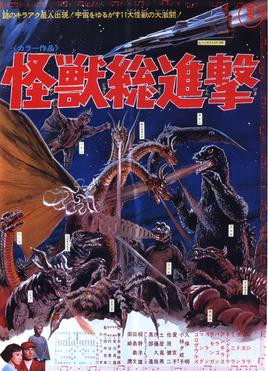
Set at the closing of the 20th century, Destroy All Monsters envisions a world where humanity has successfully pacified its giant monster threats. The film depicts a unified global society that has confined the world's kaiju to "Monsterland" (Ogasawara Island), a high-tech nature preserve. This future is characterized by a high degree of international scientific cooperation under the banner of the United Nations, signaling an optimistic view of global governance and collective security.
The technological landscape of 1999 includes a functional, manned base on the Moon and advanced remote-control technology used to monitor and contain biological threats. However, the societal stability is fragile, easily subverted by the arrival of the Kilaaks, an alien race that uses neuro-electronic signaling to seize control of both the monsters and human scientists. This dynamic suggests a future where the same infrastructure used for global protection becomes a single point of failure for extraterrestrial subversion.
In comparing this 1968 vision to the actual 1999, the film’s predictions regarding manned lunar outposts and the total unification of global military forces remained unfulfilled. While the film correctly anticipated the use of satellite-monitored wildlife preserves and global telecommunications, it overestimated the speed of lunar colonization. The "future" of 1999 in the film serves more as a technocratic utopia that is suddenly reminded of its vulnerability to external, unpredictable forces.