+13y
2007
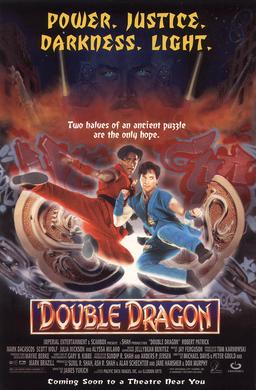
Double Dragon ↗ Wikipedia
Vision from 1994
Dir. James YukichDenmarkEnglishIMDb 3.996 min
dystopiacyberpunkenvironmental collapsecorporationsmutantsurban decay
Set in the then-future of 2007, Double Dragon depicts a Southern California transformed into "New Angeles" following a catastrophic 9.5 earthquake known as "The Big One" in 2000. The city is a semi-submerged, smog-choked wasteland where the federal government has effectively abandoned recovery efforts. This power vacuum has resulted in a fragile social contract where street gangs control the ruins at night, while the police—unarmed and largely ineffective—maintain a nominal presence during the day.
The film’s technological landscape is a mix of high-tech digital interfaces and desperate, improvised survivalism. Earth’s environment in this timeline has severely deteriorated, characterized by pervasive black acid rain and "fogcasts" that dictate daily movement. To cope with the collapse of traditional infrastructure, society has pivoted toward alternative energy, specifically vehicles powered by burning trash, reflecting a world of total resource scarcity. Corporate interests, led by the villainous Koga Shuko and his Powercorps, have filled the void left by the state, providing both the city's energy and its primary source of oppressive surveillance.
While the film’s central conflict revolves around mystical medallions, it offers several prescient, if exaggerated, technological predictions. It features early depictions of digital face-morphing databases used for law enforcement and various virtual reality simulators for driving and entertainment. The most notable Divergence from our real-world 2007 is the physical geography of California; while seismic activity is a constant threat, the total submergence of Los Angeles did not occur. However, the film's vision of privatized policing and environmental degradation due to smog remains a staple of 1990s speculative urban anxiety.