+22y
2002
The Lathe of Heaven ↗ Wikipedia
Vision from 1980
Dir. David Loxton; Fred BarzykGermanyEnglishIMDb 7.1105 min
dystopiaclimate changepsychologysurveillanceoverpopulationalternate reality
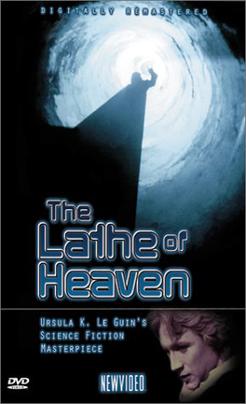
Set in a bleak, overpopulated Portland, Oregon in the year 2002, The Lathe of Heaven depicts an Earth ravaged by climate collapse and constant warfare. The protagonist, George Orr, possesses the terrifying ability to have "effective dreams"—dreams that retroactively alter reality. He is forced into psychiatric treatment where Dr. William Haber discovers this power and attempts to use it to solve the world's problems, unintentionally creating increasingly horrific alternate timelines.
The film’s dynamics focus on the danger of imposed utopias. As Haber commands Orr to dream of a world without war or racism, the reality shifts to include an alien invasion (to unify humanity) or a world where everyone’s skin is a uniform grey. The Earth remains the central hub of these shifts, reflecting a society trapped between environmental depletion and the hubris of technological or psychological "fixes" that ignore human agency.
In terms of predictions, the film’s depiction of 2002 accurately captured the anxiety of persistent greenhouse effects and melting ice caps, though it overestimated the speed of total ecological breakdown. While we have not achieved reality-warping through dreams, the film’s prediction of intrusive state-mandated therapy and technocratic control mirrors contemporary concerns regarding algorithmic manipulation of perception and biometric monitoring. The 1980 production is noted for its prescient visual language regarding urban decay and the social stratification resulting from resource scarcity.