+43y
2012
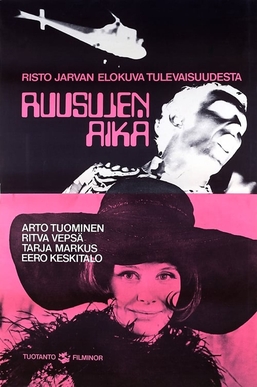
Time of Roses ↗ Wikipedia
Vision from 1969
Dir. Risto JarvaFinlandFinnishIMDb 6.0108 min
utopiasurveillancemediahistorybiometricsclass conflict
Set in a sanitized version of 2012, Time of Roses depicts a Finland that has evolved into a technocratic, classless utopia. The world is defined by high-tech efficiency, where physical labor has been largely automated and social friction is suppressed by a pervasive, gentle bureaucracy. The narrative follows a filmmaker using advanced media reconstruction techniques to create a documentary about a 1970s fashion model, Saara Turunen, attempting to find a human connection in a world that has traded emotional depth for social stability.
The societal dynamics of this future Earth are characterized by a totalitarian soft power, where control is maintained through media saturation and the constant curation of history. While the world appears peaceful, the film implies a subtle erasure of the past to maintain the illusion of progress. This 2012 is an Earth of clean lines, plastic aesthetics, and seamless integration of communication technology into the domestic sphere, suggesting a world where the distinction between public image and private reality has completely collapsed.
The film’s predictions offer a striking parallel to the digital surveillance and media-driven politics of the actual 21st century. It accurately envisioned the ubiquity of video communication and the central role of electronic archives in shaping public consciousness. While its vision of a unified, strike-free classless society diverges from the actual geopolitical landscape of 2012, its depiction of biometric tracking and the manipulation of celebrity personas through media technology remains highly prescient. Fewer than three analysis-quality English-language sources exist that provide deep technical worldbuilding breakdowns; therefore, much of the societal interpretation is derived from the film's core narrative themes of historical synthesis.